


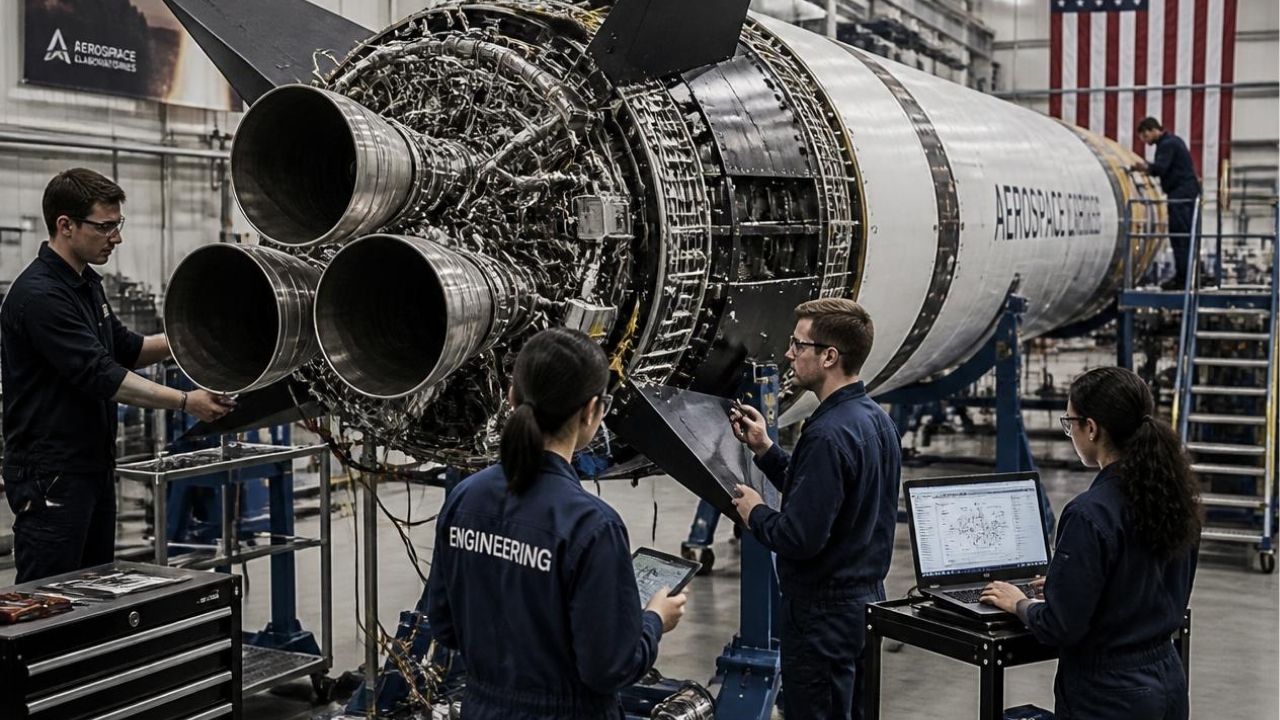
Rocket Engineering – MS (Grades 5-8)
This lesson delves into the subject of rockets from an entirely different perspective than Rocket Math not that of a mathematician, but rather that of an engineer. Specifically, this lesson explores the life and work of Robert Goddard – a brilliant engineer responsible for the development of the first successful rockets that worked based on liquid rather than solid fuel – as a case study of just how many engineering considerations go into designing something as complex as a rocket. In this lesson, we will explore Goddard’s work in detail, from his early solid-fuel rockets to his development of liquid propulsion, and finally to modern adaptations of his original design. In doing so, we will examine all the choices that go into creating a rocket, such as the materials and fuel used, tradeoffs between power and efficiency in various types of fuel (specifically focusing on solid vs liquid fuel), and how modern rockets have adapted Goddard’s system to be even more efficient in the modern day.
Index:
- Introduction
Announcements - Introduction
- Meeting Goddard: Goddard’s “ah-ha” moment
- Part One: Goddard’s Early Solid Fuel Rockets
- Part Two: The Switch to Liquid Fuels
- Part Four: A More In-Depth Look at the Tradeoffs Between Solid and Liquid Fuel
- Part 4: Lesson Conclusion
- Additional Resources
- Postcards to Space!